Prime Rib Recipe: Christmas Standing Rib Roast Made Easy
Roast a bone-in prime rib at 450°F for 15 minutes, then 325°F until it reads 120°F inside for medium-rare. Time-per-pound chart, doneness temps and tips.
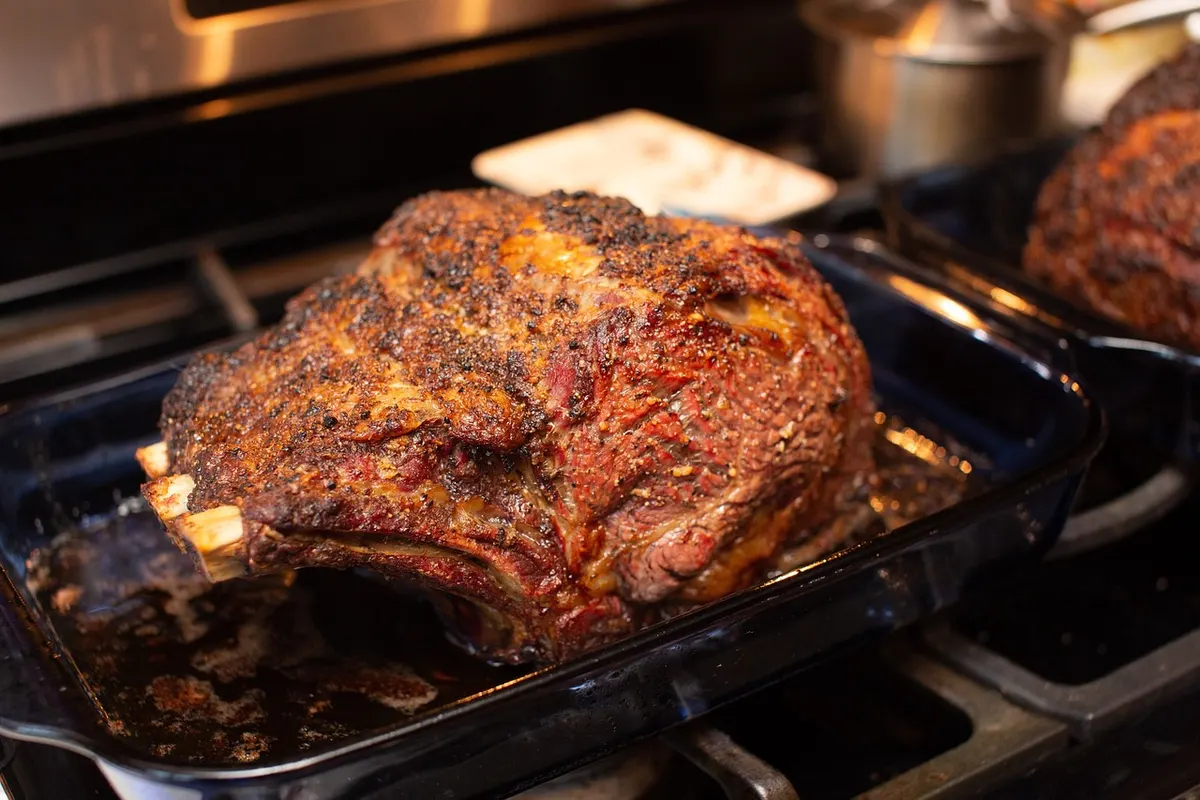
A great prime rib needs only salt, high heat and a good thermometer. Salt a bone-in standing rib roast 1 to 2 days ahead, roast it at 450°F for 15 minutes, then lower the oven to 325°F and cook until the center reads 120°F. Rest it for 30 minutes and it lands at about 130°F, a rosy medium-rare from edge to edge. A 3-rib roast (6 to 7 lb) takes about 1 hour 45 minutes to 2 hours in total and feeds 6 to 8 people.
This version adds a garlic and herb butter with orange zest, which perfumes the crust without hiding the beef, and a quick horseradish cream on the side.
Saúl’s Tip
Buy the roast early and salt it the moment you get home. This is called dry-brining: the salt draws out moisture, dissolves in it and soaks back into the meat. The dry surface left behind browns much faster in the hot oven, so you get a dark, crackly crust without overcooking the outside layer.
Prime Rib Cooking Time per Pound
These times are for a bone-in roast that has rested out of the fridge for 2 hours, cooked 15 minutes at 450°F and then at 325°F. They are guides only. Ovens and roasts vary, so start checking the temperature 30 minutes before the shortest time.
| Roast size | Ribs | Serves | Total time to 120°F (medium-rare) |
|---|---|---|---|
| 4 to 5 lb | 2 | 4 to 5 | 1 hr 10 min to 1 hr 25 min |
| 6 to 7 lb | 3 | 6 to 8 | 1 hr 45 min to 2 hr |
| 8 to 9 lb | 4 | 8 to 10 | 2 hr to 2 hr 20 min |
| 10 to 11 lb | 5 | 10 to 12 | 2 hr 20 min to 2 hr 45 min |
| 12 to 14 lb | 6 to 7 | 12 to 16 | 2 hr 45 min to 3 hr 15 min |
Add the 30-minute rest on top of these times when you plan the meal. Our Christmas dinner timeline shows how to fit the roast, the sides and the oven space into one schedule.
Prime Rib Doneness Temperatures
Pull the roast out of the oven at the first number. Carryover cooking (the heat stored in the outer layers moving toward the center) raises it to the second number while it rests.
- Rare: pull at 115°F, rests to about 125°F. Deep red center.
- Medium-rare: pull at 120°F to 125°F, rests to 130°F to 135°F. Warm, rosy pink center. This is the classic choice.
- Medium: pull at 130°F to 135°F, rests to 140°F to 145°F. Pink only in the middle.
- Medium-well: pull at 145°F, rests to about 150°F. Mostly gray-brown with a hint of pink.
The USDA recommends 145°F with a 3-minute rest for whole cuts of beef. If anyone at the table is pregnant, elderly or has a weak immune system, slice their portion from the ends, which are always more done, or cook the whole roast to medium.
The Reverse Sear Method
The reverse sear flips the order. You cook the roast low first and blast it hot at the end. It gives the most even pink color with almost no gray band under the crust.
- Heat the oven to 225°F. Roast the salted, buttered roast until the center reads 120°F. Plan on about 35 to 40 minutes per pound, so 4 to 4½ hours for a 6 to 7 lb roast.
- Take it out, tent it with foil and rest it for 30 to 60 minutes.
- Heat the oven as hot as it goes, 500°F or 550°F. Return the roast for 6 to 10 minutes, until the outside is deep brown and sizzling.
- Slice right away. It has already rested, so there is no need to wait again.
The reverse sear is forgiving, but it ties up the oven for most of the afternoon. The 450°F then 325°F method in the recipe card is faster and frees the oven sooner for side dishes.
Why This Recipe Works
- Bone-in protects the meat. The ribs shield one side from the heat and keep the meat next to them extra juicy.
- The hot start builds the crust. Fifteen minutes at 450°F starts browning the fat cap. Dropping to 325°F then lets the center cook gently.
- A thermometer removes the guesswork. A probe that stays in the meat with an alarm set at 120°F is the single best tool for this recipe.
- A long rest keeps the juices in. Thirty minutes lets the fibers relax, so the slices stay moist on the plate instead of flooding the board.
Buying the Roast
Ask for a “standing rib roast” or “bone-in rib roast.” The ribs closest to the loin end (often called the first cut or small end) are leaner and more tender. The chuck end has more fat and rich, marbled meat. Either is delicious. The label grade matters more than the name: “prime” grade has the most marbling, “choice” is the common holiday grade and works very well. Ask the butcher to cut the bones off and tie them back on. This makes carving easy and still gives you the bone benefits.
Ingredient Notes and Swaps
- Salt: Kosher salt is coarse and spreads evenly. If you only have table salt, use about half the amount.
- Herbs: Swap the rosemary and thyme for 2 tbsp chopped fresh parsley and 1 tsp dried oregano.
- No orange: Use lemon zest, or leave the zest out for a purely savory butter.
- Dairy-free: Rub the roast with ¼ cup olive oil mixed with the garlic and herbs instead of butter.
- Horseradish cream: Greek yogurt works in place of sour cream. Add 1 tsp Dijon mustard for more bite.
Common Mistakes and Fixes
- Cooking straight from the fridge. A cold center takes much longer to cook and the outside overcooks. Let it sit out for 2 hours.
- Trusting the clock. Roasts of the same weight can differ by 30 minutes. Use a thermometer.
- Probe touching the bone. Bone heats differently and gives a false reading. Aim for the center of the thickest meat.
- Slicing right away. Juices run out and the meat looks gray. Rest it for the full 30 minutes.
- Pale crust. If the outside is not brown enough when the center hits temperature, rest the roast, then return it to a 500°F oven for 5 to 8 minutes.
Make-Ahead and Storage
Salt the roast up to 2 days ahead. Mix the herb butter up to 3 days ahead and keep it covered in the fridge, then soften it at room temperature before spreading. The horseradish cream keeps for 4 days.
Refrigerate leftovers within 2 hours in a covered container for 3 to 4 days, or freeze slices for up to 3 months. Reheat slices gently: put them in a covered dish with a spoonful of beef broth in a 250°F oven for about 15 minutes, so they warm without turning gray. Leftover prime rib also makes excellent steak sandwiches.
What to Serve with Prime Rib
Prime rib loves rich, simple sides. Try crispy roast potatoes with rosemary or make-ahead mashed potatoes with cream cheese, plus something green like thyme buttered glazed carrots. Start the evening with a Christmas cheese ball with pecans and browse more Christmas main courses if you are cooking for a mixed crowd. To plan the full menu with a scaled shopping list, use the Christmas menu planner.
Prime Rib Recipe: Christmas Standing Rib Roast Made Easy
Ingredients
Instructions
- One or two days before dinner, pat the roast dry with paper towels. Rub the kosher salt over every surface, including the bone side.
- Set the roast bone-side down on a wire rack inside a rimmed baking sheet. Refrigerate it uncovered for 24 to 48 hours. The surface will look dry and darker red, which is what you want.
- On the day, take the roast out of the fridge 2 hours before cooking so it warms up a little.
- In a small bowl, mash the butter, garlic, rosemary, thyme, orange zest and black pepper with a fork until evenly mixed.
- Spread the herb butter over the top and sides of the roast. Skip the bone side.
- Place a rack in the lower third of the oven and heat the oven to 450°F.
- Set the roast bone-side down in a heavy roasting pan about 13 x 9 inches or a large cast-iron skillet. The bones work as a natural rack.
- Push an oven-safe probe thermometer into the center of the thickest part, without touching bone.
- Roast at 450°F for 15 minutes, until the fat starts to sizzle and brown.
- Lower the heat to 325°F without opening the door. Keep roasting until the center reads 120°F for medium-rare, about 1 hour 30 minutes to 1 hour 45 minutes more for a 6 to 7 lb roast.
- Move the roast to a cutting board. Tent it loosely with foil and rest it for 30 minutes. The center will climb to about 130°F.
- While it rests, stir the sour cream, horseradish, lemon juice and a pinch of salt in a small bowl. Chill until serving.
- Cut along the bones to lift the meat off in one piece. Turn it cut-side down and slice it across the grain about ¾ inch thick.
- Serve the slices with the horseradish cream and any pan juices spooned over the top.
Nutrition per Serving
Estimated from the ingredients using typical USDA values. Brands and portion sizes change the numbers.
Rate This Recipe
Frequently Asked Questions
How long do you cook prime rib per pound?
At 325°F after a 15-minute start at 450°F, plan on about 13 to 15 minutes per pound for medium-rare. Always go by the thermometer, not the clock: pull the roast at 120°F.
What temperature should prime rib be for medium-rare?
Medium-rare prime rib is 130°F to 135°F after resting. Take it out of the oven at about 120°F to 125°F, because the center keeps rising 5 to 10 degrees as it rests.
How much prime rib do I need per person?
Buy about 1 lb of bone-in roast per person, or one rib for every two guests. A 3-rib roast of 6 to 7 lb feeds 6 to 8 people with a little left over.