How to Host Friendsgiving: Potluck Plan and Ideas
Host a Friendsgiving that is easy and cheap: plan a potluck sign-up list, assign dishes, handle dietary needs, set a budget and pick simple games.
Quick answer: Host Friendsgiving as a potluck: send invitations 2 to 3 weeks ahead, cook the turkey, gravy and drinks yourself, and let guests sign up for sides and desserts. Cook the turkey to 165°F and keep hot food above 140°F.
Friendsgiving is Thanksgiving with the people you pick yourself. It’s casual, loud and fun, and it doesn’t have to be fancy. The easiest way to host is as a potluck: you cook the main dish and everyone else brings a side, dessert or drink. Here is how to plan it without stress. More ideas live on our Thanksgiving hub.
Pick a Date and Keep It Simple
- Choose a weekend date in November. Many friends travel to family on Thanksgiving Day, so the weekend before or after often works best.
- Send invitations two to three weeks ahead by text or a group chat.
- Ask for a reply by a set date so you can plan food.
- Ask about allergies and food rules at the same time.
- Set a start time and a food time. Say “come at 5, we eat at 6” so no one arrives hungry.
Plan the Menu
You don’t need all the classic dishes. Aim for a balanced table:
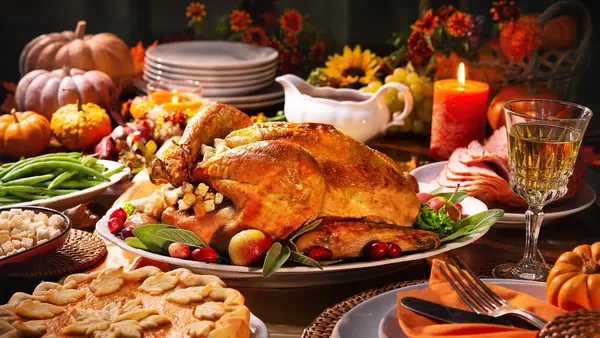
- Main: turkey, or a smaller turkey breast if you have few guests. Our guide on how much turkey per person tells you what size to buy.
- Sides: potatoes, stuffing, vegetables, cranberry sauce, rolls. Good potluck picks are make-ahead mashed potatoes, skillet cornbread dressing and green bean casserole. A creamy corn casserole is another easy dish that travels well.
- Desserts: pie, cookies or something chocolate. A classic pumpkin pie can be made 2 days ahead.
- Drinks: water, sparkling juice, cider and a few drinks for adults.
As host, you handle the turkey, gravy and the drinks. Everything else goes on the sign-up list.
Make a Potluck Sign-Up List
A shared list stops you ending up with six bowls of the same salad. Make it in a group chat or a shared note, with slots like these:
| Category | Slots to fill |
|---|---|
| Starter or snack | 2 |
| Potatoes | 1 or 2 |
| Stuffing | 1 |
| Vegetable side | 2 or 3 |
| Cranberry sauce and rolls | 1 |
| Dessert | 2 or 3 |
| Drinks and ice | 1 or 2 |
Ask people to claim a slot and write what they are bringing. Let friends who dislike cooking bring drinks, ice, rolls, napkins or paper plates. They still contribute, and nobody feels bad. For more ideas, read our Christmas potluck guide, which works for any holiday.
Who Brings What
- Good cooks: the dishes that need real work, such as casseroles or pie.
- Less confident cooks: store-bought rolls, a relish tray, a bagged salad or ice.
- People traveling a long way: drinks or dessert that travels well.
- People with small kitchens: a no-cook dish like a cheese board or fruit.
Ask everyone to bring their dish in a container or pan with a serving spoon, and to label it with a name tag. Tell them whether it needs the oven so you can plan.
Budget-Friendly Tips
- Potluck is the budget move. Everyone brings one thing.
- Cook a smaller bird or just a breast if you have fewer than eight people.
- Skip fancy extras. Simple recipes taste great.
- Borrow chairs and plates from friends, or use sturdy paper plates.
- Buy in-season produce such as squash, potatoes, apples and cranberries.
- Ask for a drink contribution so you don’t buy everything.
Many of the same money savers work for the big day itself; see how to host Thanksgiving on a budget.
Handle Dietary Needs
Ask, don’t guess. Common requests are vegetarian, gluten-free, dairy-free and nut allergies.
- Ask each guest to list allergies when they RSVP.
- Ask people to put a small card by their dish listing the main ingredients.
- Make sure at least one main-style dish is vegetarian, such as stuffed squash or mushroom gravy.
- Keep serving spoons separate for each dish to avoid cross-contact.
- If someone has a serious allergy, ask what they can safely eat and have a dish for them.
Set Up the Space
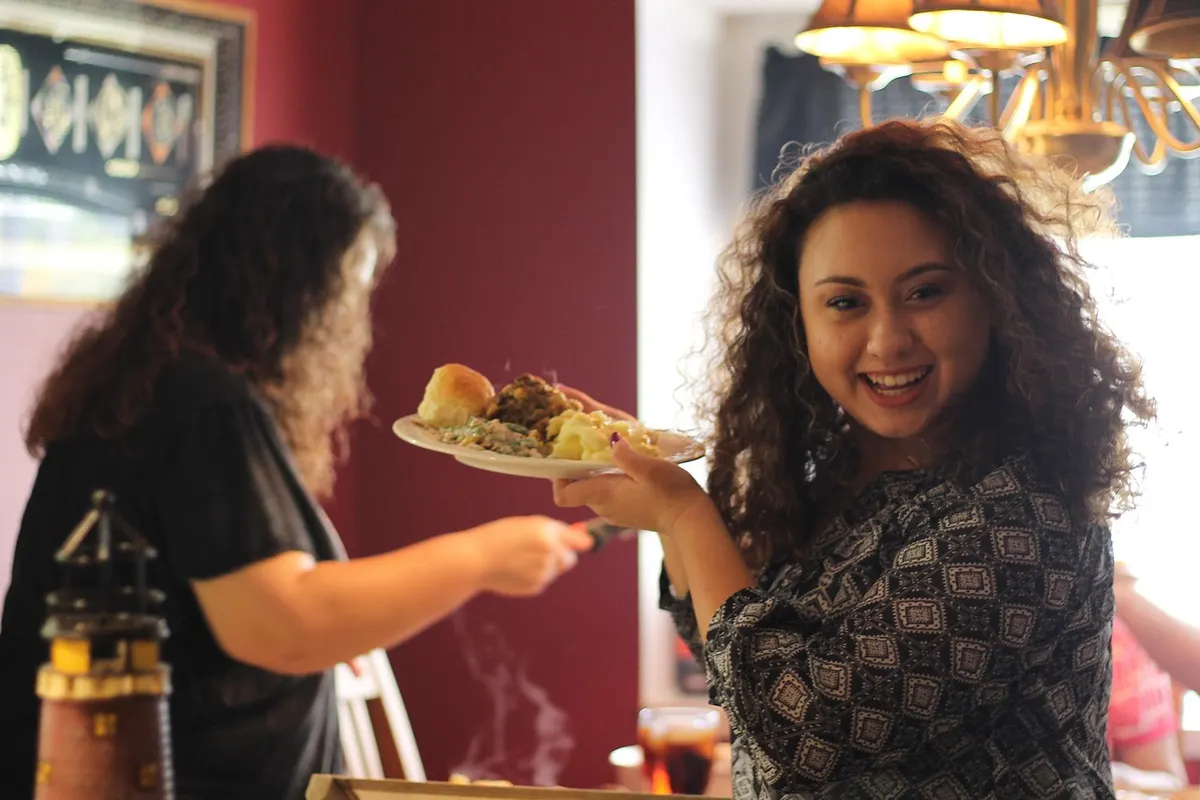
- Clear a table or counter for the buffet. A buffet is easier than a sit-down meal for a big group.
- Put plates and cutlery at the start of the line and napkins at the end.
- Label dishes with sticky notes.
- Use a slow cooker or warming tray to keep dishes hot.
- Make a coat spot, a trash and recycling bin, and a place for leftovers.
Easy Games and Activities
After eating, keep it relaxed. You don’t need to schedule everything.
- Trivia: try our Thanksgiving trivia questions.
- Games: pick from the Thanksgiving games for family list. Most work for adults too.
- Gratitude jar: everyone writes one thing they are thankful for and the host reads them aloud. Our family gratitude jar shows how to set one up.
- Dessert vote: let people vote for the best pie.
- Movie or football in the background for those who want a break.
Food Safety for a Potluck
- Keep hot food hot (above 140°F) and cold food cold (below 40°F).
- Don’t leave food out more than 2 hours.
- Put leftovers in the fridge within 2 hours.
- Cook the turkey to 165°F.
- Send guests home with containers so food doesn’t go to waste.
After the Party
Ask guests to take their dishes and containers home. Pack leftovers for guests who want them. Then take a deep breath and sit down. The best Friendsgiving is a full table of happy friends, not a perfect one. For a wider plan, see our Thanksgiving dinner timeline.
Frequently Asked Questions
What is Friendsgiving?
Friendsgiving is a Thanksgiving-style meal shared with friends instead of, or in addition to, family. It is usually a potluck where guests each bring a dish and the host cooks the turkey.
When should you have Friendsgiving?
Many people pick a weekend in early to mid November, or the weekend after Thanksgiving. This avoids clashing with family plans on the holiday itself. Send invitations about two to three weeks ahead.
How much does it cost to host Friendsgiving?
Costs stay low when the host buys only the turkey and drinks and guests bring a dish each. Splitting the cost of the main dish and reusing what you already own keeps spending down.